Retractable belt & spool
Compact storage with an integrated return mechanism and belt lock.

Prana Wearable
Breathwork apps tell you how to breathe. Prana senses whether you did.
Prana technology is available for licensing or acquisition.

01 / The form factor
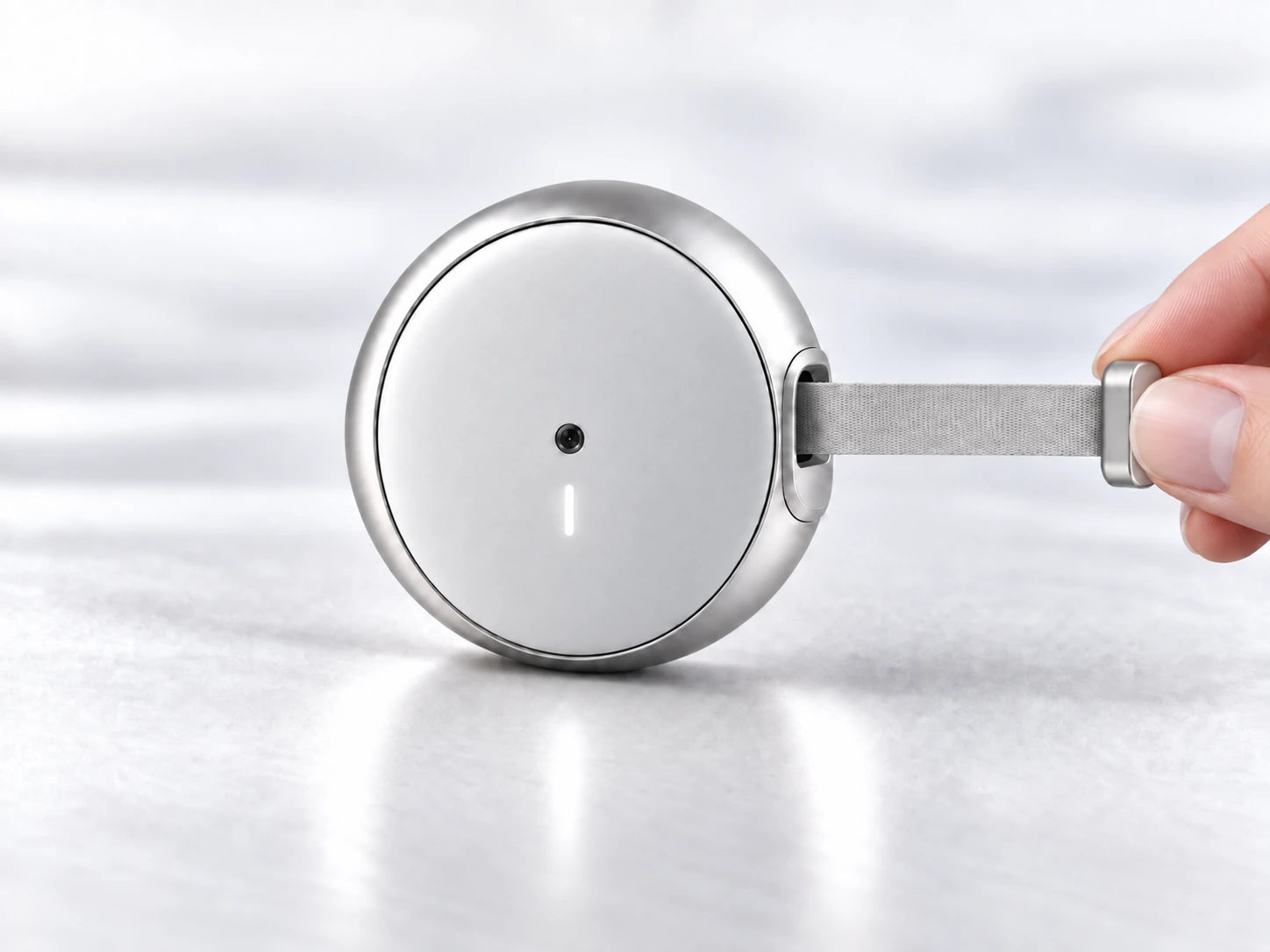
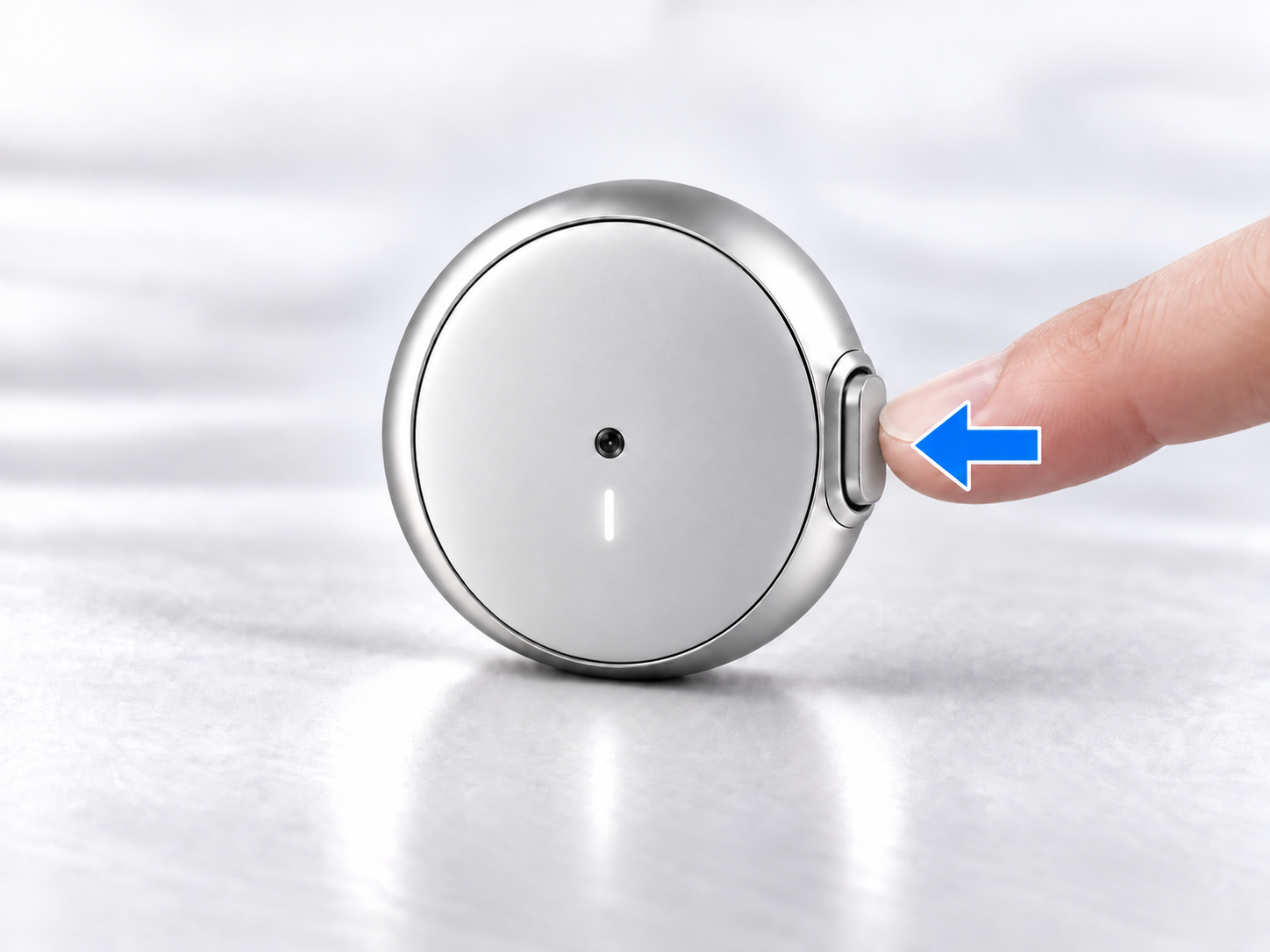
Push the clip to release it.
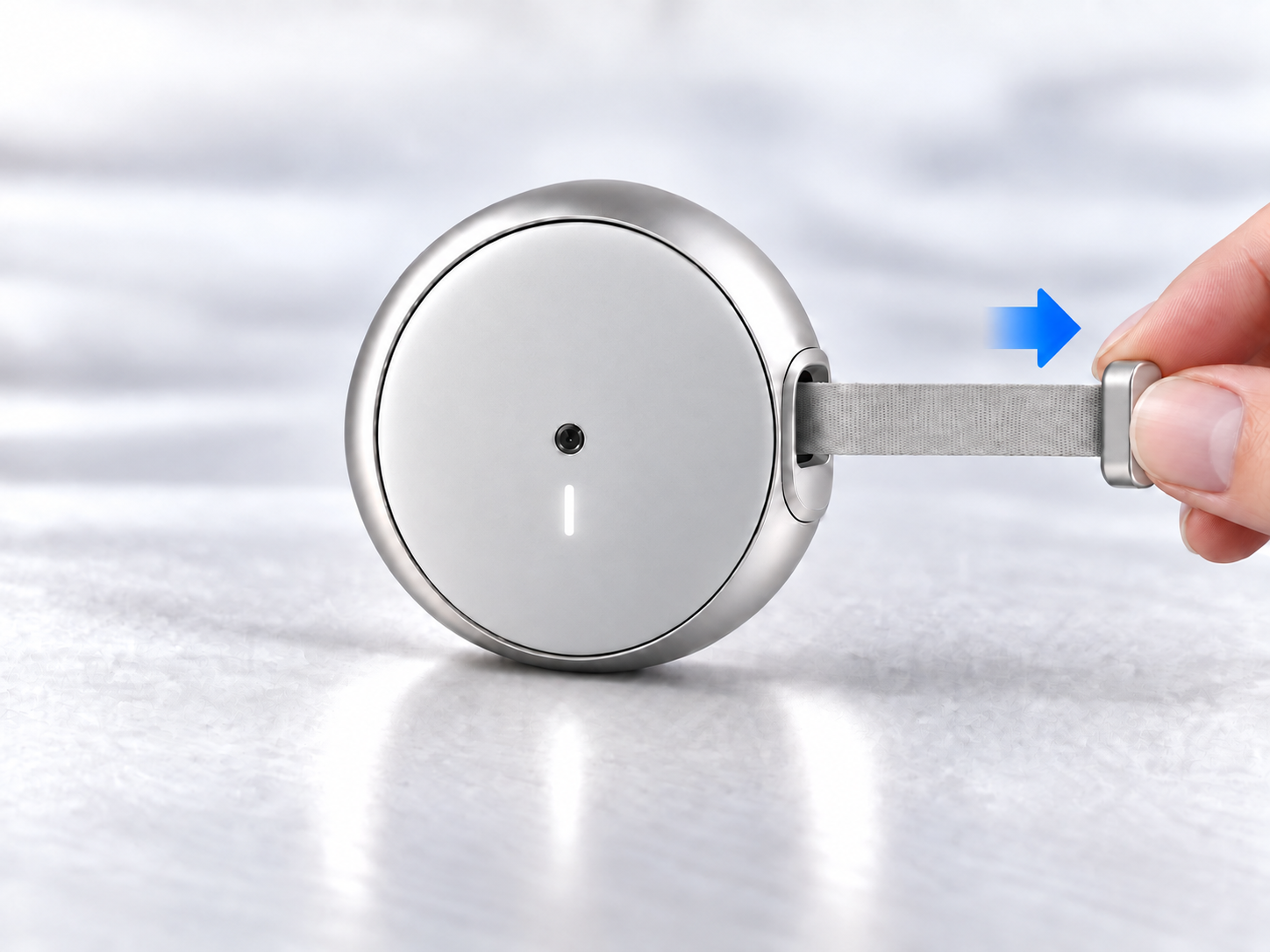
Pull the clip to extend the belt around the torso.
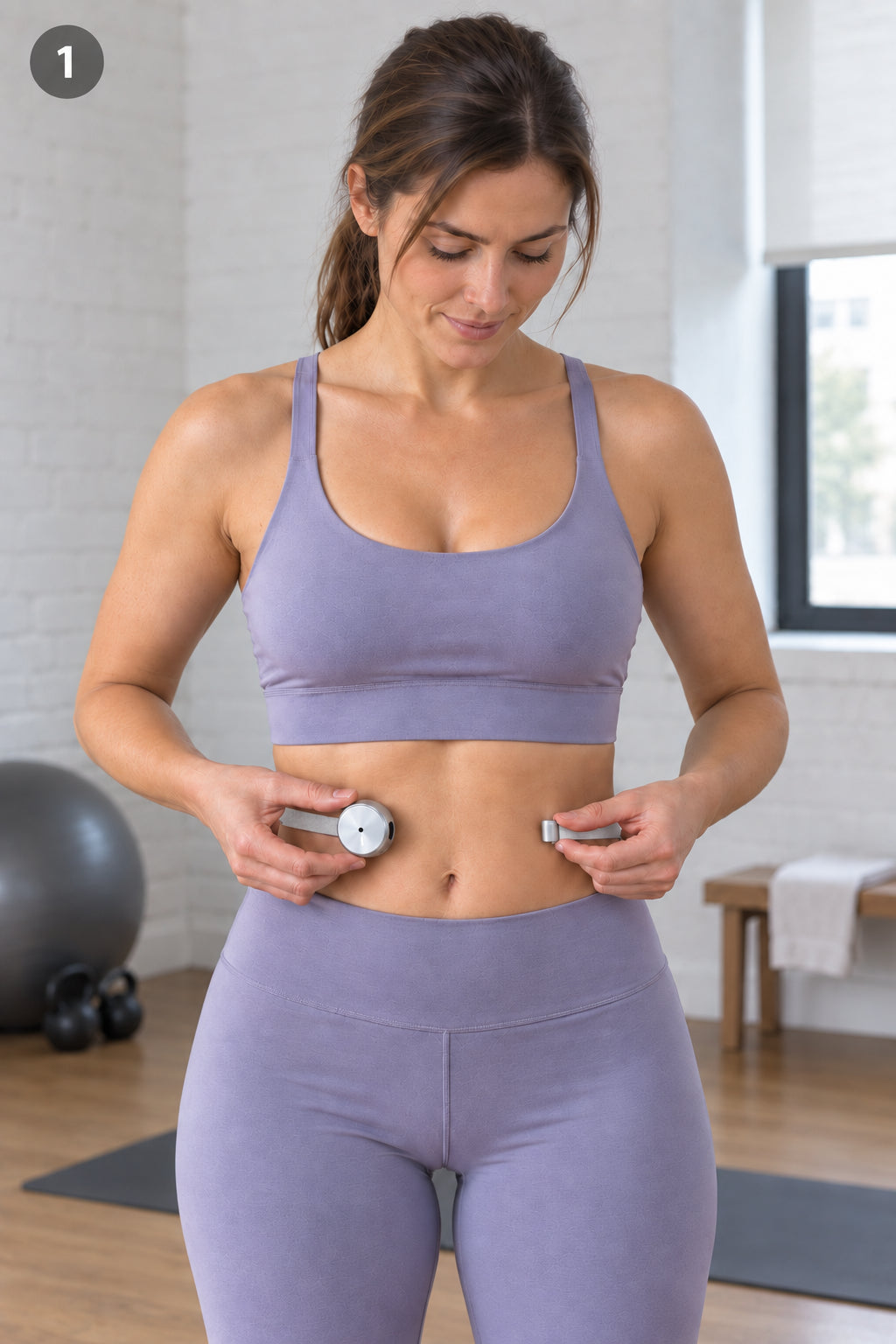
Clip in and begin your session.
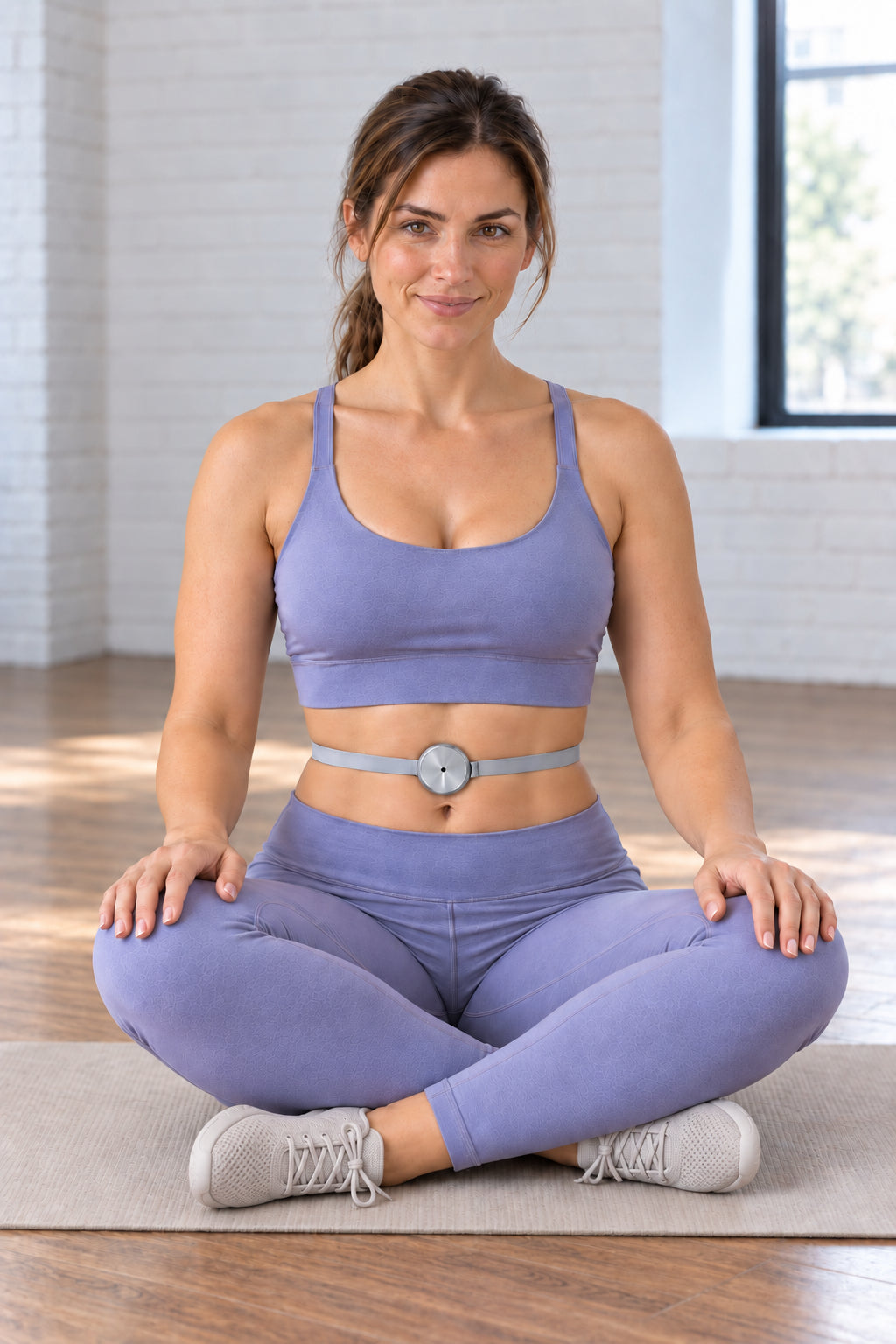
Next-generation hardware visualizations.
02 / The software
Breath-driven interaction
Inhale to rise. Exhale to descend. Follow a trail of flowers through a quiet garden, with the path expressing the breathing pattern.
Our next-generation game, fully playable now, not a simulation. Available for demo.
3:36 · Play video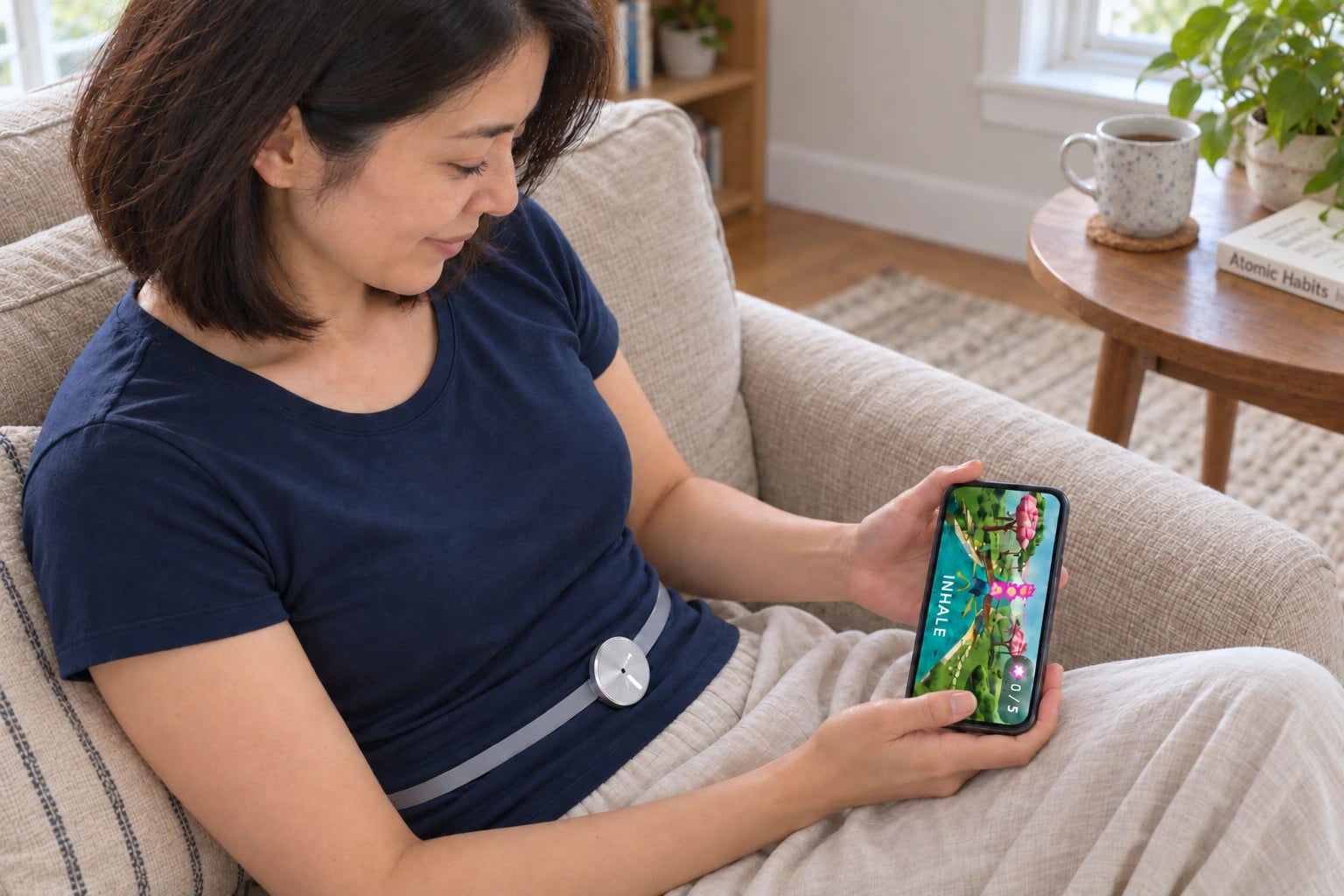
Prana offers an API that connects live sensor data to other interactive experiences, including virtual reality (VR).
Prana connects a breathing exercise to the person doing it. Sensor feedback makes each inhale, exhale, and pause part of the experience—and part of the session record.
Choose a breathing exercise or a custom pattern. Includes over 80 breathing exercises derived from clinical research.
Follow the breathing exercise with real-time sensor data. Use visual, haptic, or gamified training for live feedback.
Explore performance and adherence over time. Breath session data can be exported to other digital health platforms.
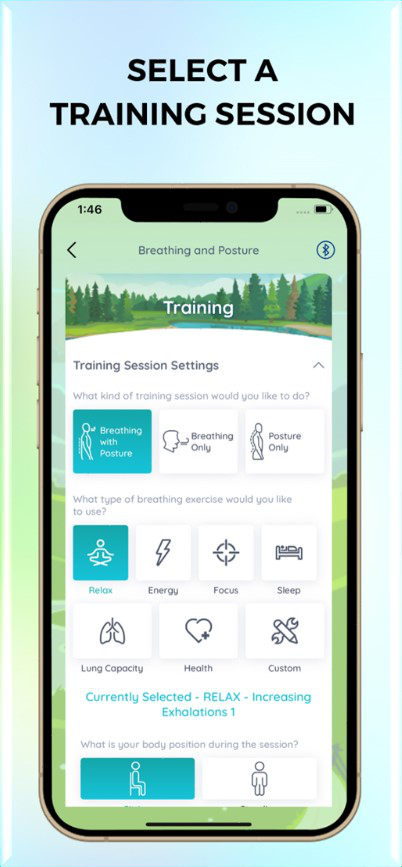
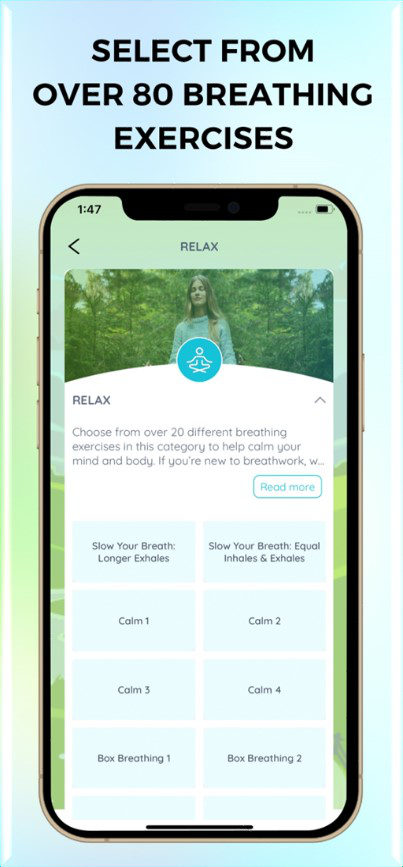
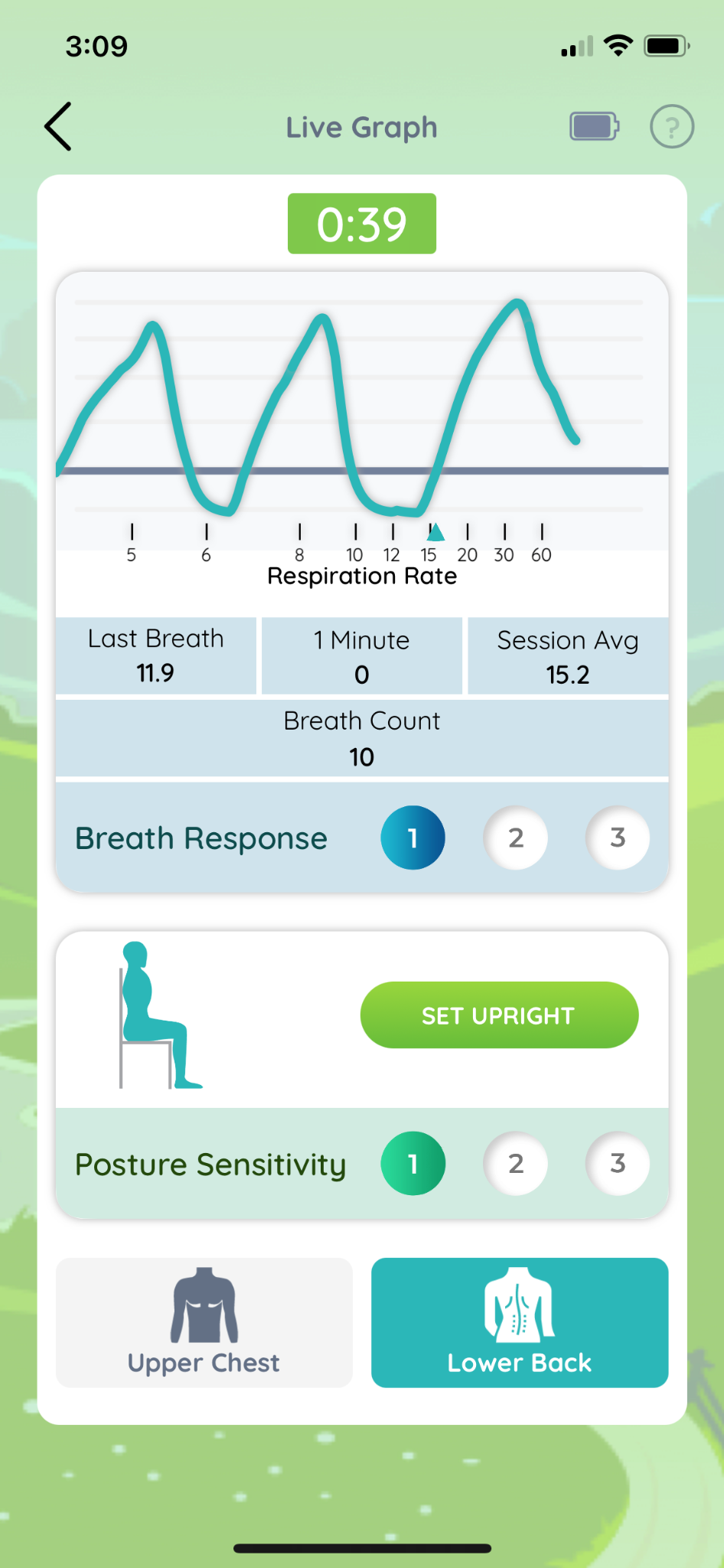
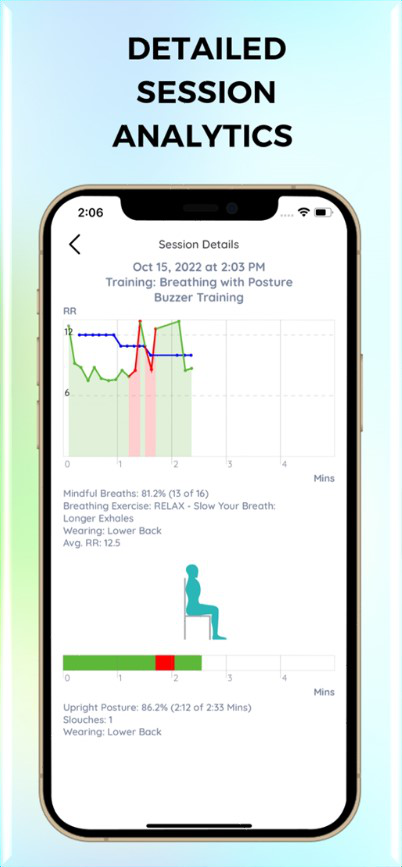
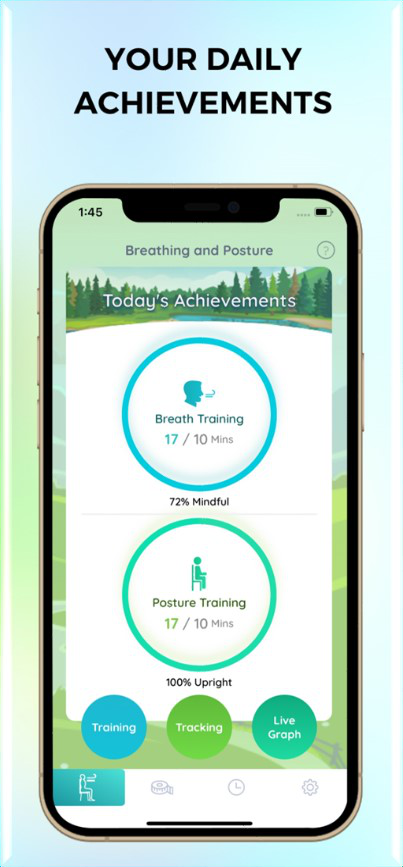
Existing Prana iOS app
The existing iOS platform brings together an extensive exercise library, sensor feedback, and session analytics.
Breathing controls an interactive experience. The bird rises with an inhale and descends with an exhale.
Vibration cues guide inhalation, exhalation, and holds, with feedback when breathing departs from the target pattern.
Monitor breathing patterns to detect stress patterns and get notification warnings. Optional posture feedback can accompany passive tracking while resting or working at a desk.
The software tracks inhalation and exhalation timing, pauses, breath consistency, and the relationship between the actual breathing pattern and the exercise target.
Breathing and posture can be trained together or separately. Placement on the lower back or upper torso supports different training goals.
The original retractable platform also supports body-circumference measurements and history, extending the utility of its hardware architecture.
03 / Inside the technology
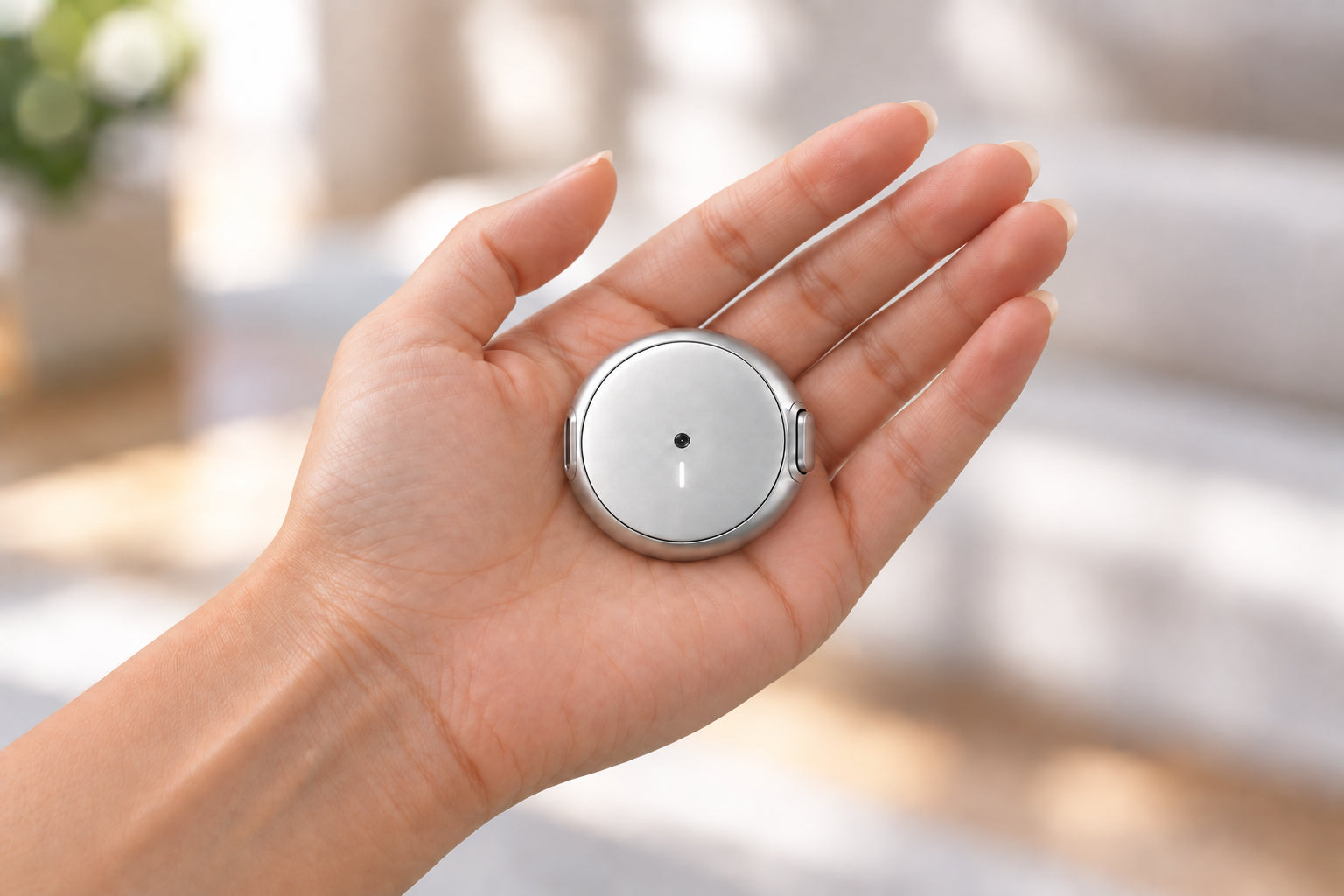
A retractable mechanical architecture brings the belt, sensing, electronics, and power into one wearable. The round design builds on the original platform’s engineering approach.
Compact storage with an integrated return mechanism and belt lock.
The belt couples torso expansion to the sensing assembly during breathing.
Sensing, wireless connectivity, battery power, and feedback within a single pod.
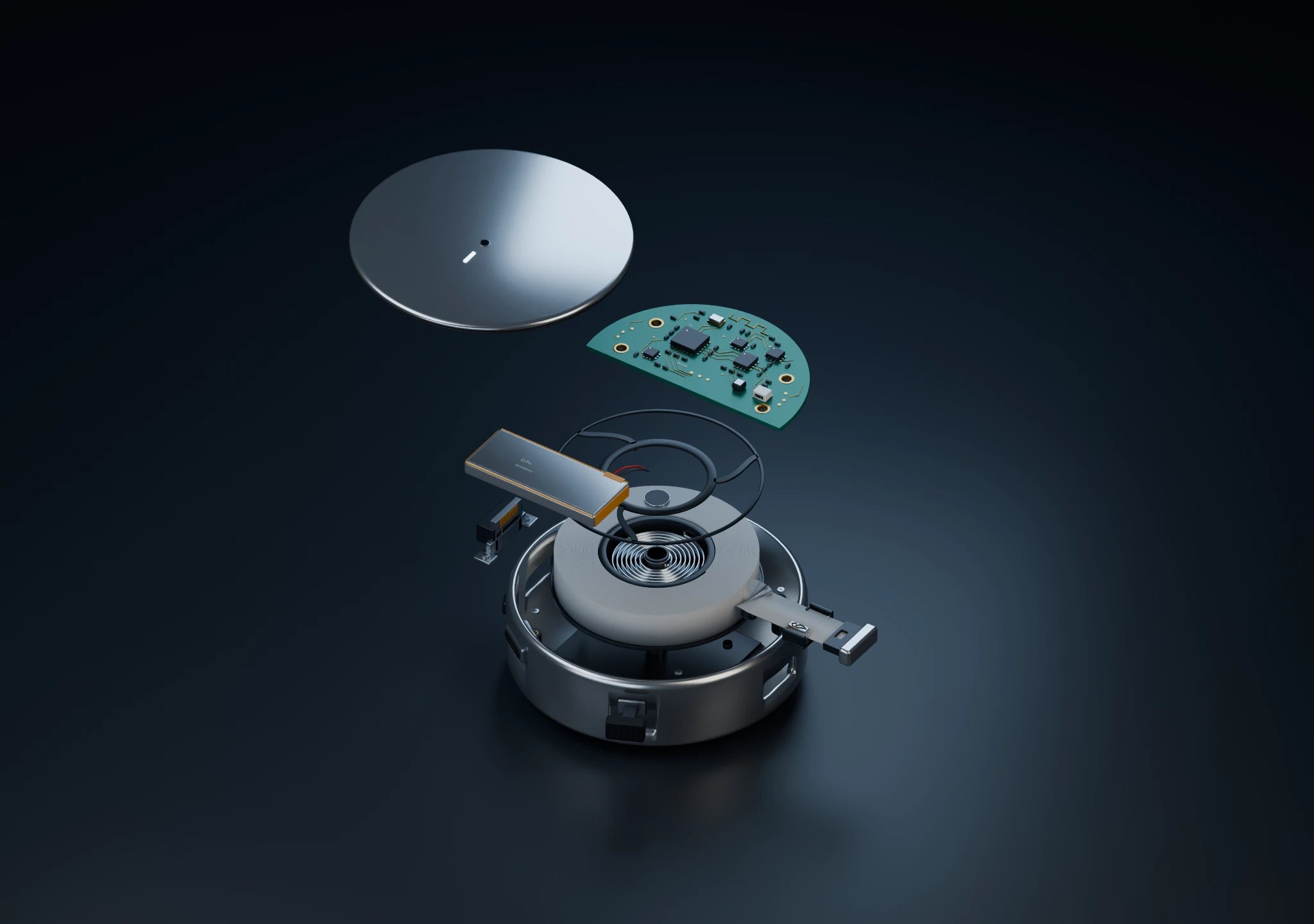
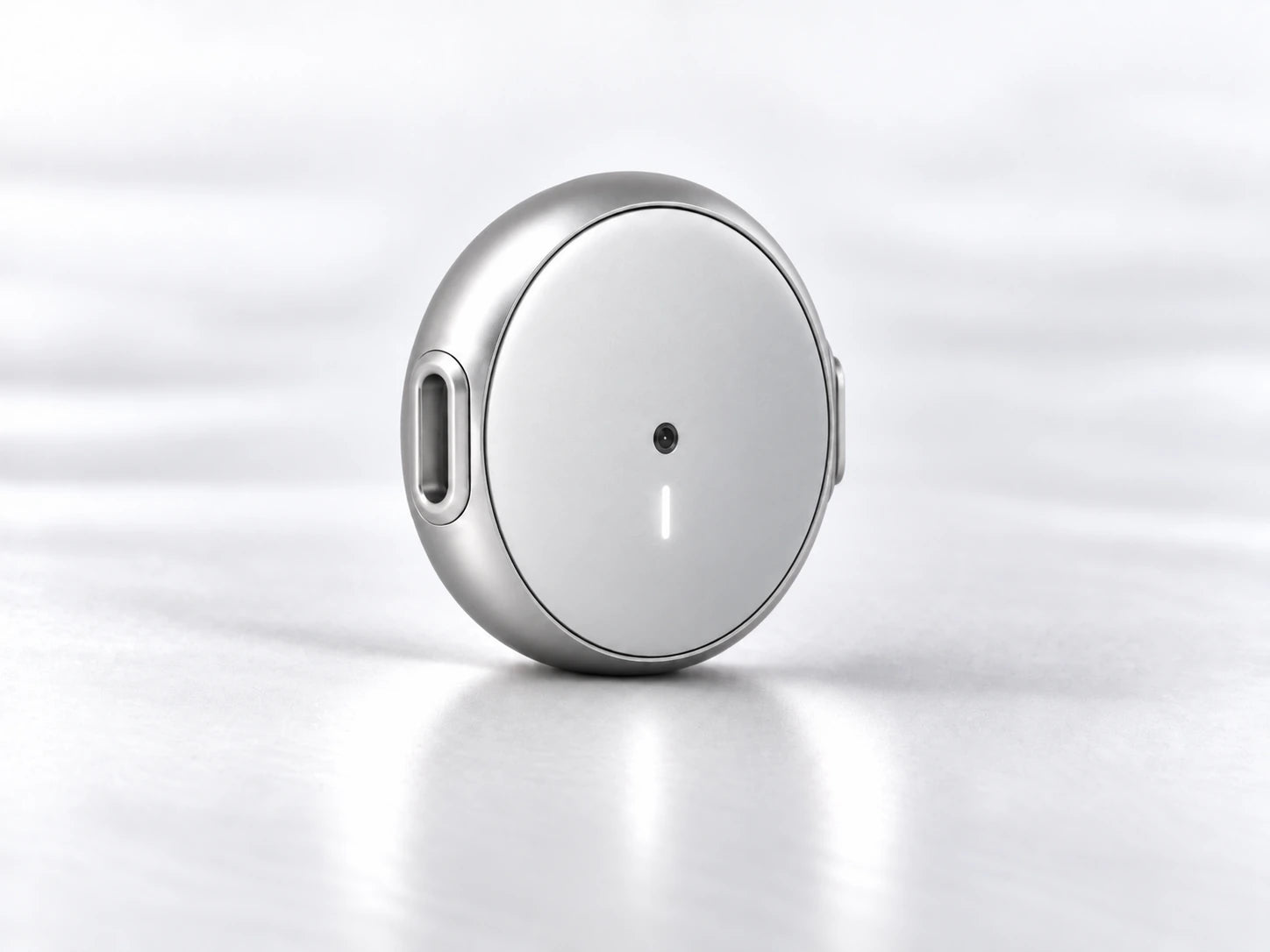
No bulky belt strap. The thin belt retracts into the device, ready for the next session.
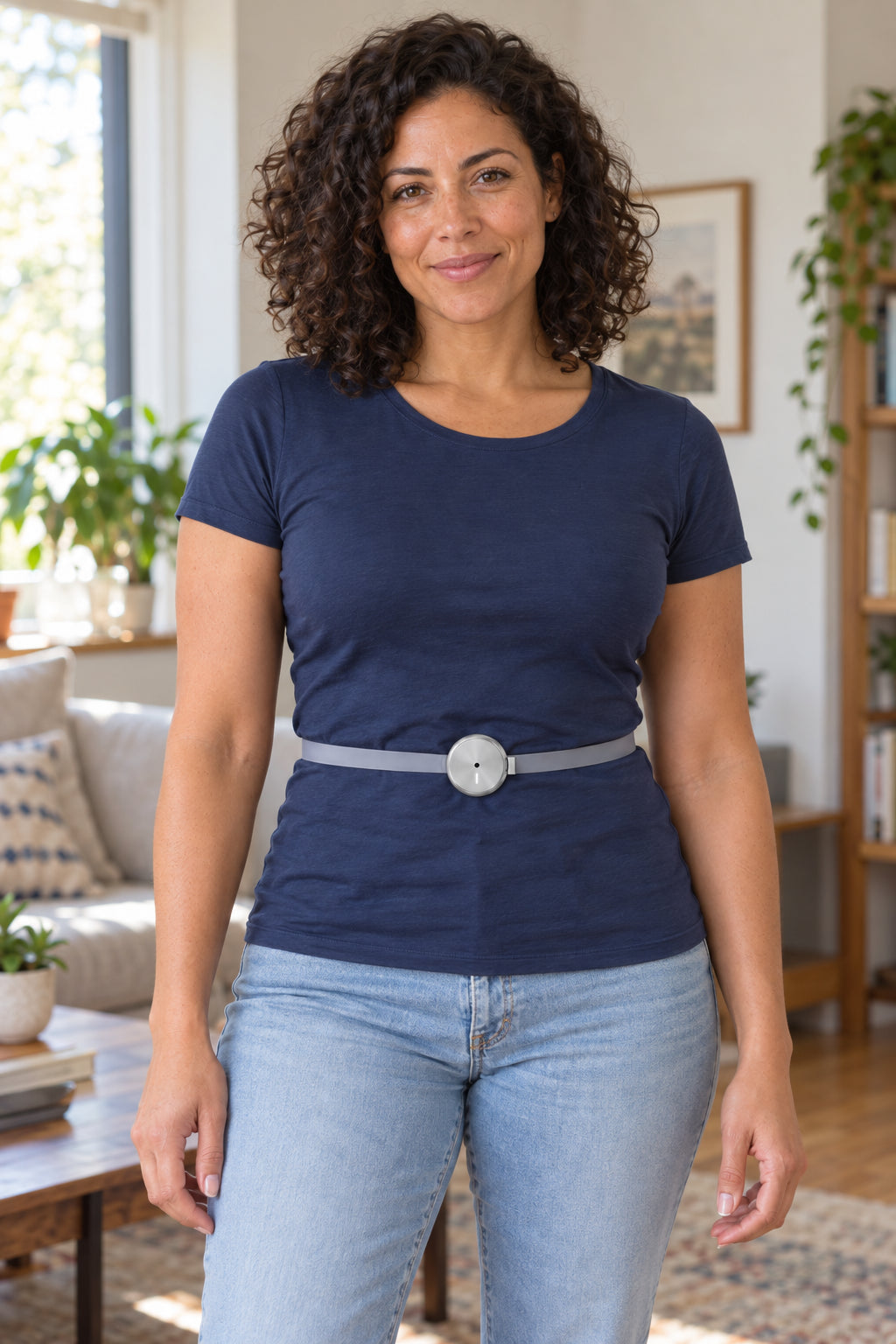
Quickly wear it over or under clothing, without clipping to a tight waistband or needing a special shirt.
The retractable belt extends to fit the torso. Connect the clip and lock the belt at the chosen fit.
No adhesive patches, replacement tape, or shaving needed. Put it on and take it off within a few seconds for each session.
04 / Applications
Prana brings real-time guidance and feedback to breathing exercises, helping people follow the practice and researchers review adherence.
A search for breathing exercises on ClinicalTrials.gov returns over 5,000 study records . Prana helps make participant adherence visible through sensor feedback and shareable session data.
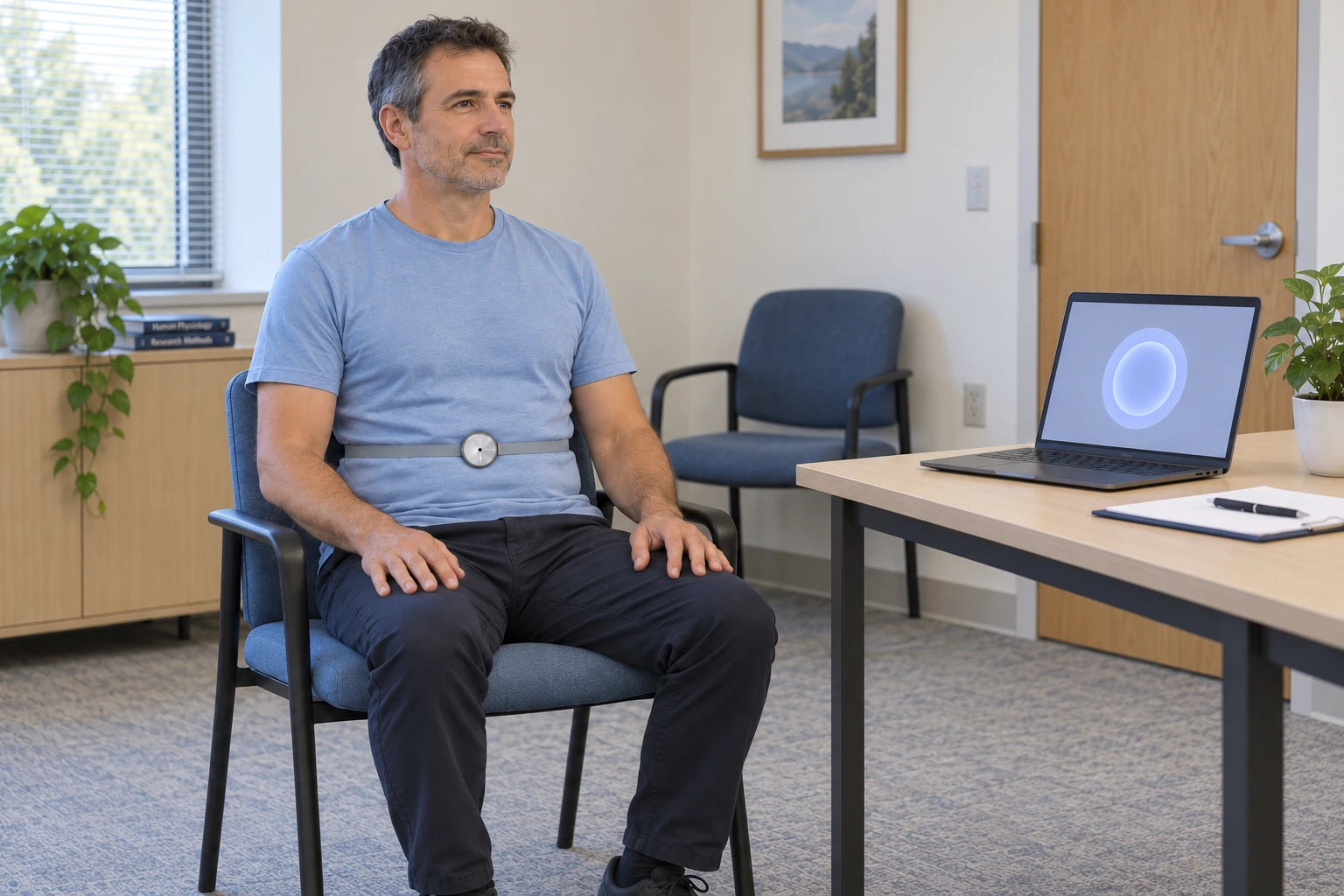
Haptic and visual cues guide your breathing practice, including sessions completed independently at home.
Track breathing patterns, adherence to the exercise, and posture when relevant to the study.
Export records for review and analysis.
These are potential uses for breathing guidance and adherence tracking, not demonstrated treatment outcomes for Prana.
Live feedback gives people a way to follow a breathing pattern and see their progress, while feeling more engaged. For wellness apps and wearable ecosystems, that opens up experiences built around:
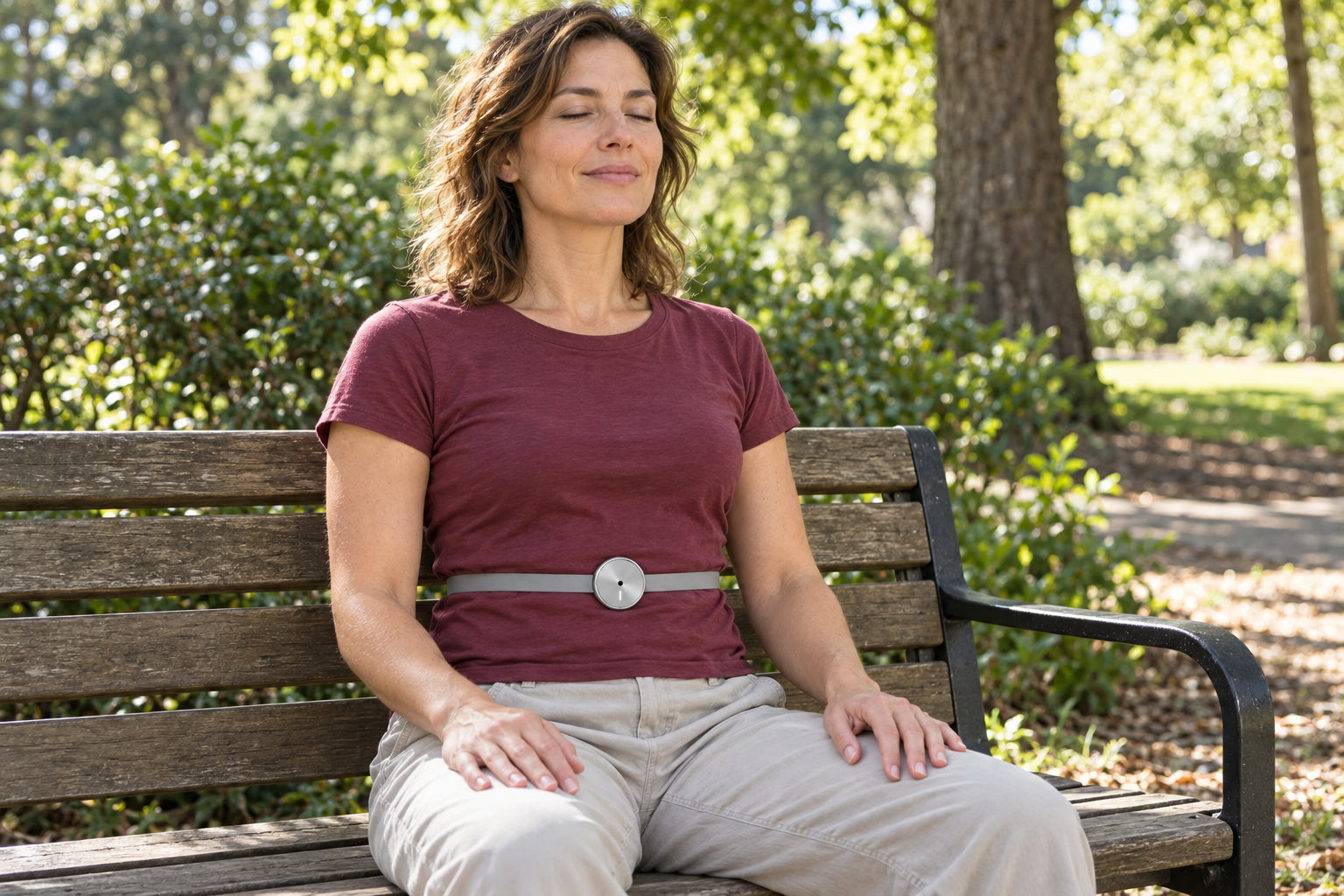
Screen-free breathing guidance
A compact pod and thin belt make it easy to begin a session at home or during a break. Haptic cues support quiet practice without watching a screen.
Designed for use at rest: sitting, standing, or lying down. Posture training depends on placement and position.
05 / Track record
Prana’s pilot run of 120 devices was manufactured, sold, and shipped to customers.
Customers could follow breathing exercises with live visual or vibration feedback, train their posture, and review their sessions in the Prana iOS app.
Original manufactured platform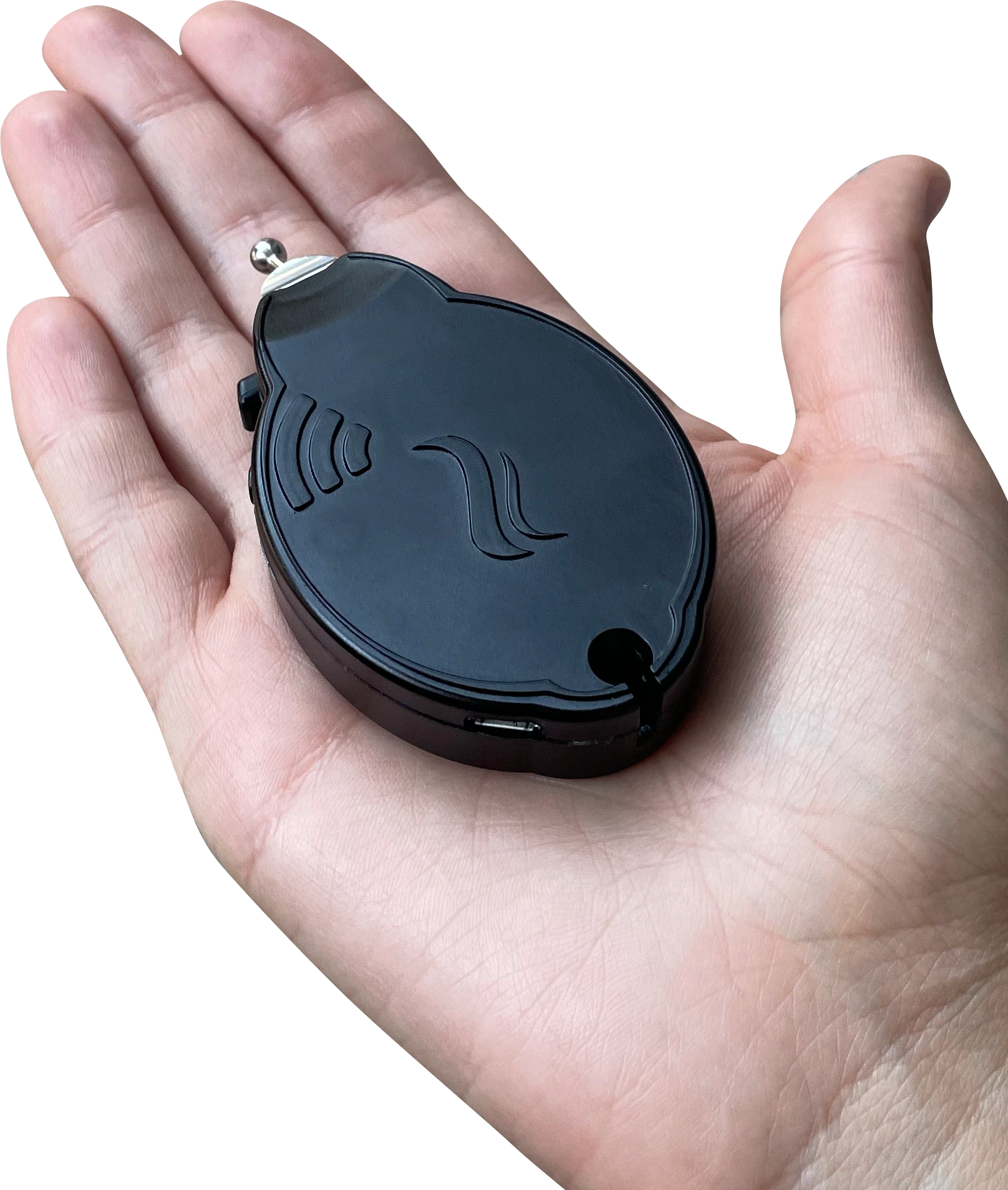
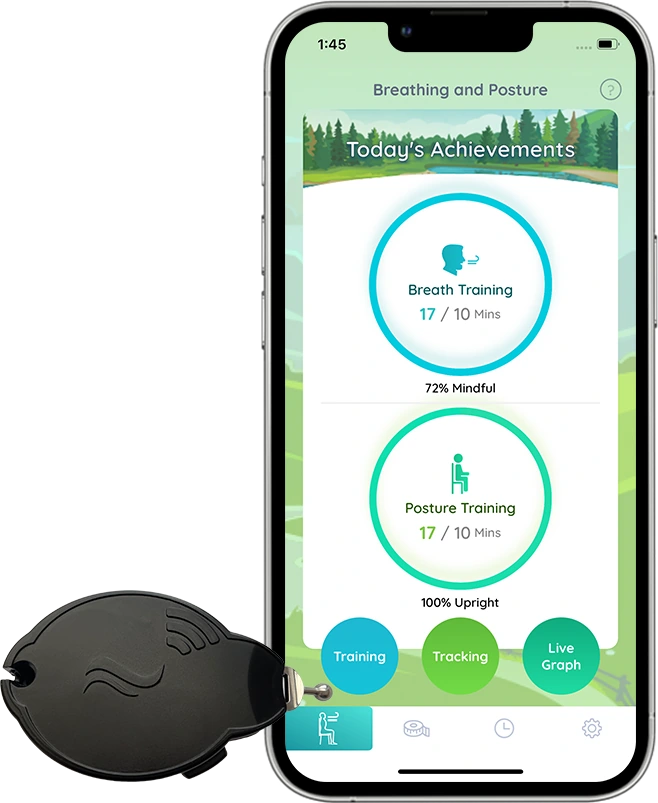
From choosing an exercise to reviewing a session, Prana connects the wearable and app in one experience. Customers could shape their practice with custom breathing patterns, receive feedback as they trained, and return to their session records over time.
The round device shown throughout this page illustrates the next generation of the original Prana platform.
Respiratory community
Prana was presented at the American Thoracic Society’s 2023 Respiratory Innovation Summit. The original poster describes the wearable, training platform, and applications in breathing research.
Research use
Prana supports yoga-breathing research in spinal cord injury at Spaulding Rehabilitation Hospital, with investigators affiliated with Harvard Medical School. The study combines guided training with six weeks of home practice using the Prana app.
Study NCT06514950Research use and conference participation are not institutional endorsements or evidence of clinical effectiveness.
“The software is what impresses the most, along with the number of customization options.”Hands-on review of the original device
“The Prana app itself is pleasantly designed and feature-rich.”A closer look at the hardware and app
Breathing exercises depend on timing, movement, and consistency. Prana makes those elements visible with live feedback and session records, helping people practice and researchers review adherence.
Research looks beyond breaths per minute to examine how breathing patterns, abdominal movement, and posture relate to physiology and wellbeing.
Inhale and exhale duration, pauses, and their ratios shape a breathing pattern. Research has compared slow breathing rhythms and their effects on heart rate variability and relaxation.
Slow breathing & HRV studyMovement of the abdominal wall helps make diaphragmatic breathing visible. A randomized study examined diaphragmatic breathing training in relation to attention, emotional state, and cortisol.
Diaphragmatic breathing studyBody position is another part of the breathing context. A study in people with COPD examined how breathing technique and posture affected lung volumes and ventilation.
Posture & breathing studyThese studies explore breathing practices and physiology; they do not evaluate the Prana device.
06 / Licensing & acquisition
For respiratory-care companies, digital-health teams, wellness platforms, and wearable ecosystems looking to add a dedicated breathing-training and tracking capability.
System and method to monitor, guide, and evaluate breathing, utilizing posture and diaphragm sensor signals.
View the issued patentU.S. application 17/523,731
See Figs. 206–221, which detail our previously manufactured and shipped device.
Patent prosecution history is available upon request.
View the published applicationExpected patent term through 2035.
Exercise content, training modes, and session analytics.
Connects Prana to other interactive experiences, including virtual reality (VR).
Licensing or acquisition scope can be discussed around the buyer’s goals.
Get in touch to discuss the platform, available materials, and commercial opportunities.